
Get In Touch

WordPress Multisite: What It Is, When to Use It, and How to Set It Up (2026)

Scroll

Home » Blog » WordPress » WordPress Multisite: What It Is, When to Use It, and How to Set It Up (2026)

You’re running four, ten, or thirty WordPress sites, and every plugin update means logging into each one separately. WordPress multisite turns that pile of separate installs into one network you manage from a single dashboard — one codebase, one login, one set of updates pushed everywhere at once.

It is not the right fit for every situation, though. Multisite concentrates risk the same way it concentrates convenience: one hosting outage, one bad plugin, one hacked site can take down every property in the network at the same time. This guide covers what multisite actually is, when it earns its complexity, how to set it up (including the wp-config.php snippet), which hosting holds up under it, and how it stacks up against running separate installs or a management tool like MainWP.

WordPress multisite network dashboard managing multiple sites from one login

What Is WordPress Multisite?

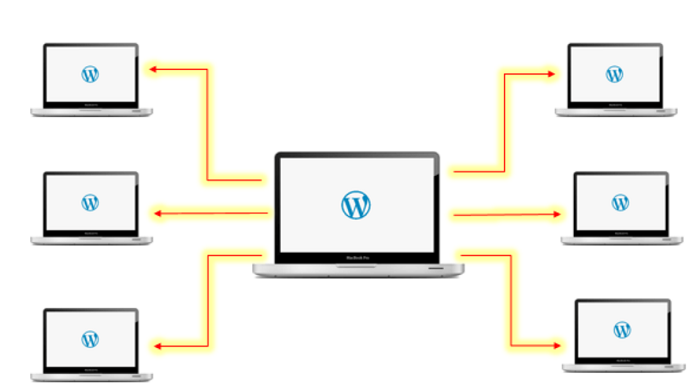
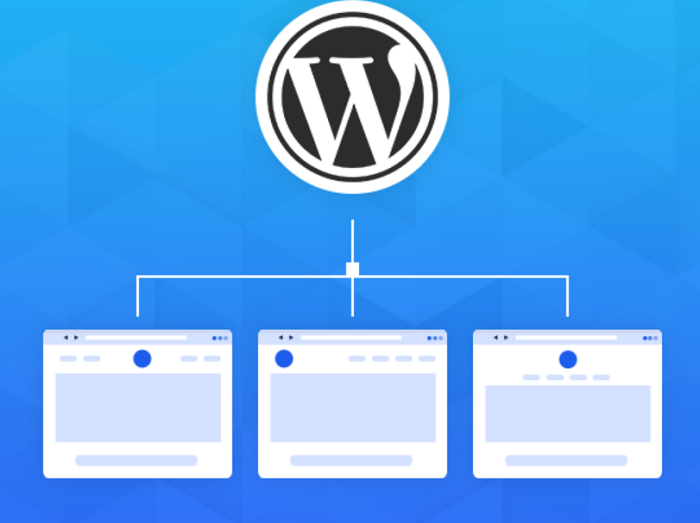
WordPress multisite is a single WordPress installation that hosts and manages multiple websites from one dashboard, one codebase, and one database. Instead of installing WordPress core separately for every site, one install powers a whole network — each site gets its own content, and in most cases its own theme and settings, while sharing the same core files, plugin files, and user table.

Think of it as the difference between running ten separate apartment buildings, each with its own boiler, wiring, and superintendent, versus one large building with separate units but shared infrastructure. You still get separate, private spaces — but the maintenance crew only has to show up once.

Every WordPress install already ships with the multisite feature built in; it’s dormant until you enable it in wp-config.php. A network admin oversees the whole structure and can create new sites, manage network-wide plugins and themes, and control which site admins are allowed to do. Individual site admins manage their own content but typically can’t install new plugins or themes unless the network admin grants that permission.

This is different from having “multiple WordPress sites” in the general sense — five unrelated WordPress installs on the same hosting account are not a multisite network. Multisite specifically means one WordPress core managing many sites through its built-in Network feature.

When Should You Use Multisite (and When Should You Not)?

Multisite makes sense when your sites genuinely need to share code, users, or management overhead — and the wrong choice when they don’t. The deciding factor isn’t how many sites you have; it’s how related they are.

Good Fits for Multisite

  • Franchise or multi-location businesses — one clinic chain, one restaurant group, one real estate brokerage with a site per location, all sharing the same theme and core plugins with only content differing.
  • Universities and school districts — a main site plus a subsite per department or school, with centralized IT control and consistent branding.
  • Media companies and publishers — one publication running regional or topic-specific editions (a US site, a UK site, a niche vertical) that share the same editorial tooling.
  • Agencies managing client sites they fully control — when you own the hosting relationship and want to push plugin and core updates to a client roster in one action.
  • SaaS-style or membership networks — platforms like a directory of member-run mini-sites (this is effectively how WordPress.com itself runs).

When Not to Use Multisite

Be honest about these before committing, because reversing course later is expensive:

  • Unrelated sites with different owners or purposes. If a plugin update breaks something, it breaks it for every site on the network at once. A client’s brochure site and your internal blog have no business sharing infrastructure.
  • Sites with conflicting plugin needs. Multisite shares the plugin files across the network, and not every plugin is coded to be multisite-compatible — some assume a single-site environment and will misbehave with subsites, particularly plugins that manage users, e-commerce, or caching in non-standard ways. WooCommerce, for example, runs on multisite but treats every subsite as a fully separate store — separate products, orders, and customers — so it won’t give you a shared cart or inventory across the network.
  • You need per-site isolation for security or compliance. A security breach or misconfiguration on one subsite has a larger blast radius than it would on a standalone install, because the vulnerability sits at the shared core/plugin level.
  • One site needs to scale dramatically differently from the others. If one property in the network suddenly needs enterprise-grade traffic handling, you can’t easily peel it off and scale it independently without a full migration.
  • You’re not sure you’ll keep managing all of them together. Migrating a single subsite out of a multisite network and into a standalone WordPress install is a genuinely painful, database-table-surgery kind of job — far harder than the reverse.

If most of your “when not to” list above describes your situation, separate installs or a management tool (covered below) will save you a migration headache later.

How Do You Set Up WordPress Multisite?

You enable multisite by adding a code snippet to wp-config.php, running the network setup wizard in wp-admin, then adding a second snippet with your unique network keys. It’s a two-step process split around one wizard screen.

Step 1: Prepare Your Site

Before touching any code:

  1. Back up your full site — database and files. This is not optional.
  2. Deactivate all plugins. Multisite conversion can conflict with active plugins mid-process.
  3. Confirm you’re running the default theme or a multisite-compatible one, and note that multisite requires a clean permalink structure (not the default “plain” setting).

Step 2: Enable Multisite in wp-config.php

Open wp-config.php and add this line above the line that says / That's all, stop editing! /:

define('WP_ALLOW_MULTISITE', true);

Save the file and reload wp-admin. A new Network Setup option will appear under Tools.

Step 3: Run the Network Setup Wizard

Go to Tools → Network Setup. WordPress will ask you to choose between subdomains (site2.yourdomain.com) and subdirectories (yourdomain.com/site2) — more on that choice below — and will ask for your network title and admin email.

Click Install, and WordPress will generate a second code block for you to add.

Step 4: Add the Network Configuration

Copy the generated snippet into wp-config.php (replacing the WP_ALLOW_MULTISITE line) and add the matching rewrite rules to .htaccess. It will look approximately like this:

define('MULTISITE', true);
define('SUBDOMAIN_INSTALL', false);
define('DOMAIN_CURRENT_SITE', 'yourdomain.com');
define('PATH_CURRENT_SITE', '/');
define('SITE_ID_CURRENT_SITE', 1);
define('BLOG_ID_CURRENT_SITE', 1);

Log back into wp-admin and you’ll now see a new My Sites menu with a Network Admin dashboard for creating and managing subsites.

WordPress multisite setup steps showing wp-config.php code and Network Admin dashboard

Step 5: Reconfigure DNS (Subdomain Installs Only)

If you chose subdomains, add a wildcard DNS record (*.yourdomain.com) pointing to your server so any subsite address resolves correctly, and confirm your hosting plan supports wildcard subdomains before you commit to this path.

Subdomain vs. Subdirectory: Which Should You Choose?

Choose subdomains if you might move a site to its own domain later or need cleaner separation for branding; choose subdirectories if you want a simpler DNS setup and slightly easier SEO consolidation under one root domain.

FactorSubdomains (site2.domain.com)Subdirectories (domain.com/site2)
DNS setupRequires wildcard DNS recordNo extra DNS configuration
SSLNeeds a wildcard SSL certificateSingle certificate covers all subsites
Perceived independenceFeels like a separate site to visitorsFeels like a section of the main site
Future domain mappingEasier to later map to a fully separate domainMore friction to break out into its own domain
SEO structureSearch engines may treat as more distinct propertiesContent typically inherits more authority from root domain
Best forFranchises, multi-brand networks, university departmentsLanguage versions, regional editions, closely branded verticals

Note: subdomain vs. subdirectory can only be set at the moment you run Network Setup — switching later requires a migration, not a settings change.

What’s the Best Hosting for WordPress Multisite?

The best hosting for multisite is a managed WordPress host with resource isolation, wildcard SSL/subdomain support, staging environments, and headroom sized for your busiest subsite, not your average one. Multisite hosting requirements scale with your entire network’s combined traffic and storage, not any single site’s footprint.

Specifically, look for:

  • Wildcard SSL and subdomain support — mandatory if you’re going the subdomain route.
  • Generous PHP memory limits and worker processes — a network of 15 sites under moderate traffic needs meaningfully more headroom than one site.
  • Staging environments — you need to safely test plugin and core updates against the whole network before pushing them live, since one push touches every subsite.
  • Object caching (Redis or Memcached) — multisite adds database query overhead as the network grows; a persistent object cache keeps things fast.
  • Real backups at the network level — confirm the host backs up the entire multisite database, not per-site (most single-site backup tools don’t fully understand multisite table structures).
  • Support staff who’ve actually handled multisite — ask before you buy. Multisite issues are different enough from single-site issues that generalist support can waste hours of your time.

If your network is customer-facing, revenue-driving, or otherwise business-critical, this is exactly the kind of infrastructure decision worth getting a second opinion on. Our team handles WordPress site maintenance for multisite networks specifically because generalist maintenance plans routinely underestimate what a network needs to stay fast and secure.

Multisite vs. Separate Installs vs. Management Tools

If your sites don’t need shared code or a unified login, a management tool like MainWP or ManageWP gives you most of multisite’s convenience without concentrating the risk in one install. This is the comparison most teams actually need to make before touching wp-config.php.

WordPress MultisiteSeparate InstallsMainWP / ManageWP-style Tool
Centralized updatesYes, one action updates allNo, manual per siteYes, pushed from a central dashboard
Shared user loginYes, built inNoNo — separate logins per site
Site independenceLow — shared core/plugin filesFullFull — each site is a standalone install
Blast radius of a failureWhole networkSingle site onlySingle site only (dashboard failure ≠ site failure)
Per-site plugin/theme flexibilityLimited without network admin approvalFullFull
Setup complexityModerate, one-timeNoneLow, per-site connector plugin
Best forTightly related sites under one ownerFully independent sitesAgencies managing many independent client sites

For agencies and businesses managing a portfolio of client sites that don’t share branding or code — which describes most of the WordPress maintenance work we do — a management tool is usually the safer, more flexible choice. Multisite earns its keep specifically when the sites are meant to behave as one coordinated network.

If you’re weighing this decision for a client roster or your own growing site count, our custom WordPress development team can architect whichever structure actually fits — including hybrid setups where a subset of closely related sites run multisite while others stay independent under a management tool.

Comparison of WordPress multisite vs separate installs vs management tools like MainWP

Must-Have Plugins for a Multisite Network

A few plugins consistently pay for themselves once you’re running multisite:

  • User Role Editor (multisite-compatible version) — fine-tune what site admins can and can’t do without full network-admin access.
  • WP Offload Media — centralizes media storage in cloud object storage rather than duplicating uploads across subsites.
  • Multisite Language Switcher — if subsites represent different languages/regions rather than different brands.
  • Network-wide security plugin (e.g., a multisite-aware firewall/security suite) — because a vulnerability on one subsite is a vulnerability on the network.
  • Backup solution with confirmed multisite support — verify this explicitly before relying on it; not all backup plugins handle the multisite table prefix structure (wp_2_, wp_3_, etc.) correctly.

Migrating Into (or Out of) Multisite

If you already have several standalone WordPress sites and are consolidating them into a multisite network, the process typically involves exporting each site’s content via XML, setting up the new subsite, and importing content in — plus manually reconciling media libraries and any custom database tables plugins created.

If you’re moving hosts at the same time as converting to multisite, or your current host can’t support multisite’s DNS and resource requirements, handle the hosting migration first and separately. Our guide on migrating your website to a new host covers exactly that groundwork before you introduce network complexity on top of it.

Going the other direction — extracting one subsite out of a network into its own standalone install — is more involved: it requires exporting that subsite’s specific tables, remapping the table prefix, and rebuilding any network-shared plugin configuration locally. Plan for this as a proper migration project, not a quick export/import.

Frequently Asked Questions

What are the benefits of WordPress multisite?

The core benefits are centralized management (one login, one set of updates for every site), shared themes and plugins (install once, use everywhere), reduced server overhead compared to fully separate installs, and consistent branding across a network of related sites. The trade-off is that those same shared resources mean less per-site isolation.

What’s the best hosting for WordPress multisite?

A managed WordPress host with wildcard SSL/subdomain support, generous PHP memory and worker limits, staging environments, persistent object caching (Redis/Memcached), and network-aware backups. Size the plan for your network’s combined peak traffic, not any single subsite’s average load.

What’s the best way to manage multiple WordPress sites?

It depends on how related the sites are. If they share branding, users, or need centralized updates, multisite is the tightest fit. If the sites are independently owned or run conflicting plugins, a management dashboard like MainWP or ManageWP gives you centralized updates without merging the sites’ underlying infrastructure.

Can I run 2 WordPress sites on 1 host without multisite?

Yes — this is one of the most common points of confusion. You can install WordPress twice (or more) on a single hosting account as fully separate, unrelated installs. That’s just “multiple WordPress sites on one host,” not multisite. Multisite specifically means one WordPress core and one database managing multiple sites through the Network feature; separate installs on shared hosting share only the server, not the codebase or login.

Can I share code across multiple WordPress sites without multisite?

Yes. A custom-built shared plugin or must-use (mu-plugin) can be deployed identically across separate installs, and a management tool can push plugin/theme updates to many standalone sites from one dashboard. This gets you code-sharing convenience without the shared-core risk profile that multisite carries. Multisite is a genuinely powerful structure for the right situation — and genuine overkill, with real downside, for the wrong one. If you’re not sure which side of that line your site portfolio falls on, or you want a network built and hosted properly the first time, get in touch with our WordPress team and we’ll help you architect it right.

Alex Founder Web Help Agency

Alex

Founder

a moment ago

Looking for web developers?

Ready to chat? Simply click the button and select your preferred call time.

Let's discuss it chat-bubble